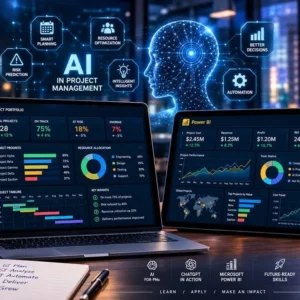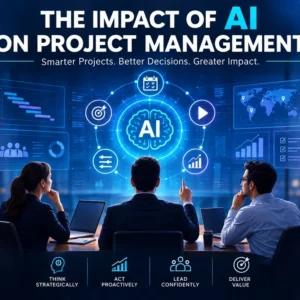
Most project managers are already falling behind on AI—not because they lack the skill, but because no one has shown them where it actually fits into their work.
This course fixes that. AI in Project Management takes you from “I know AI matters” to “I use it every day,” with practical methods you can apply to real projects immediately—whether you’re a Project Manager, Scrum Master, Product Owner, PMO Professional, Business Analyst, or Team Leader.
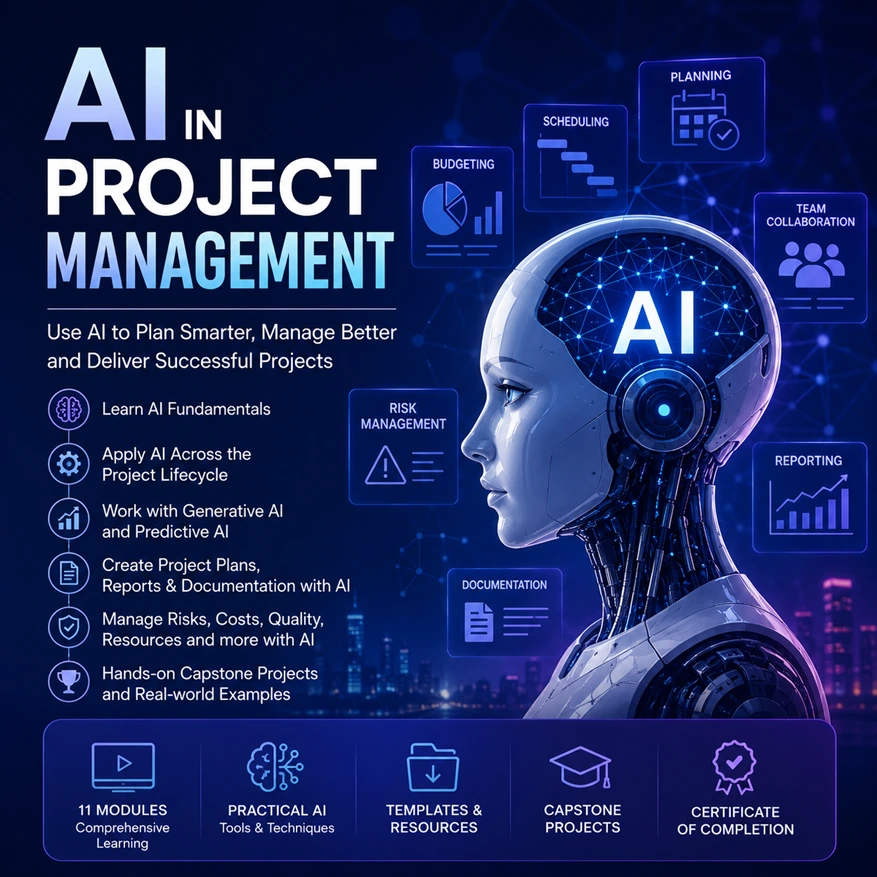
You’ll learn AI from the basics, then put it to work across every stage of a project: planning, scheduling, budgeting, communication, reporting, documentation, quality, risk, procurement, and stakeholder management. Not theory. Not generic prompt tricks. Specific, project-tested ways to get more done with less effort.
By the end, you’ll be the person on your team who ships faster, forecasts more accurately, and spends time on decisions that matter—instead of busywork.
Enroll now and start applying AI to your next project this week.
What You’ll Learn: After completing this course, you'll be able to:
✔ Understand the fundamentals of Artificial Intelligence
✔ Differentiate between Generative AI and Predictive AI
✔ Use AI to improve project planning and scheduling
✔ Apply AI for project monitoring and reporting
✔ Improve stakeholder communication using AI
✔ Generate project documentation faster
✔ Learn to identify the right AI tools for different project management activities
✔ Create business cases, WBS, user stories, and project plans with AI
✔ Build schedules, budgets, and resource plans
✔ Perform AI-assisted risk management and quality management
✔ Understand AI security, governance, compliance, and regulations
✔ Implement AI strategies within organizations
✔ Complete an end-to-end AI-powered project management capstone project
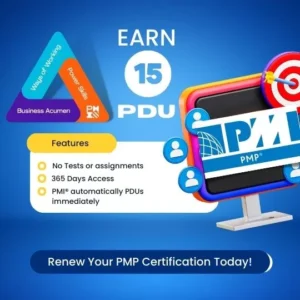
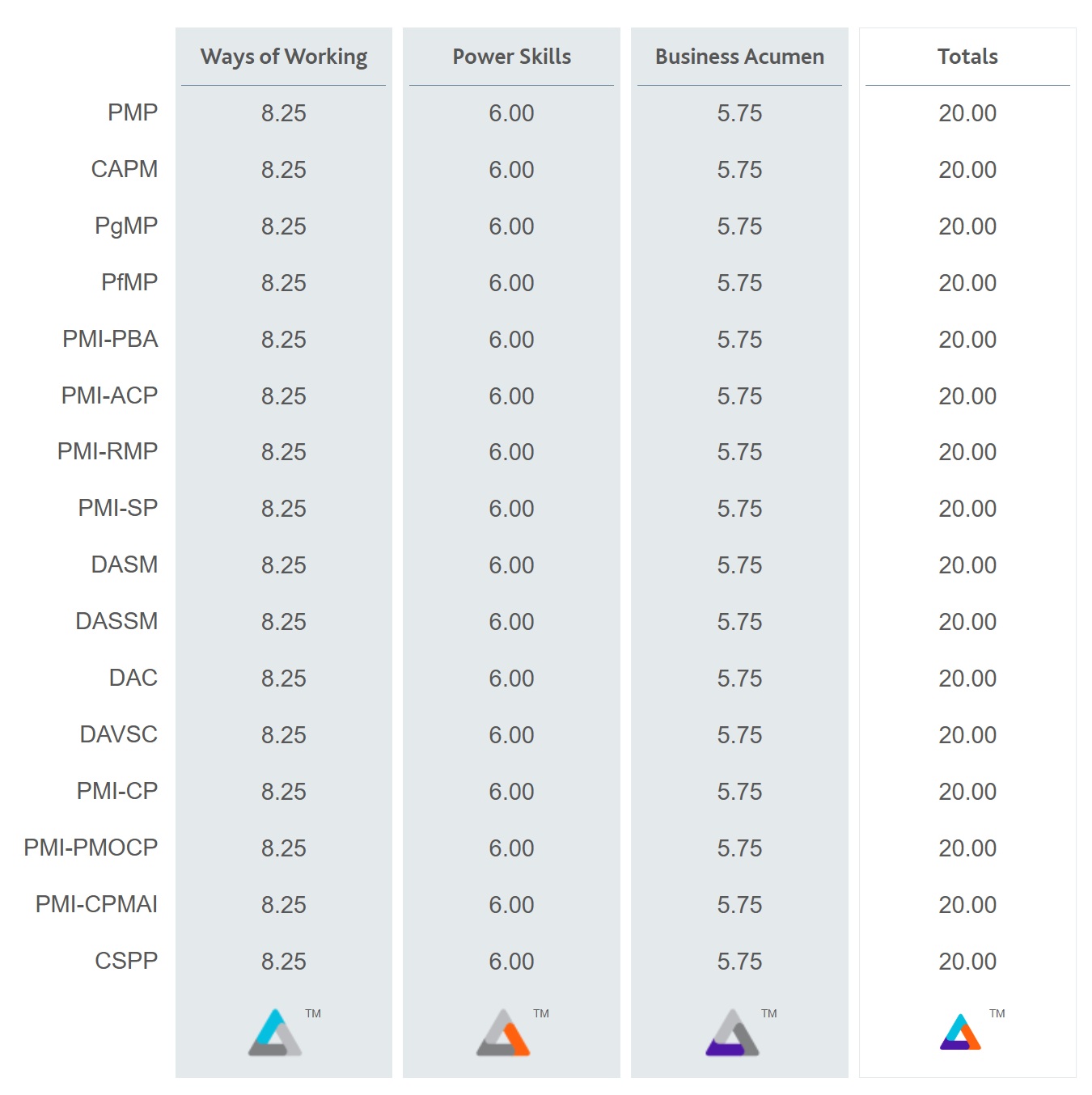
Talent Triangle Distribution - 20 PDUs

Course Syllabus
- Engaging on-demand video content
- Real-life Case-studies & Examples
- Access to tools
- 50 comprehensive lessons
- Capstone Projects
- Downloadable Resources
| Section | Lecture |
|---|---|
| Module 1 • Introduction to AI | |
| 1.1 | Everyday Examples of AI |
| 1.2 | What does AI mean? |
| 1.3 | What are the Elements of AI? |
| 1.4 | Three Types of AI |
| 1.5 | Understanding the Technology Behind AI |
| Module 2 • AI in Project Management | |
| 2.1 | Automation vs. Intelligence: Key Concepts for Project Managers |
| 2.2 | The Role of AI in Modern Project Management |
| 2.3 | Understanding the Seven Core Patterns of AI |
| 2.4 | Understanding Generative AI and Predictive AI |
| 2.5 | Human Oversight in AI: Why It Matters |
| 2.6 | What is a Prompt and Why Does It Matter? |
| 2.7 | Limitations of Generative AI: What You Need to Know |
| 2.8 | Predictive AI: Forecasting the Future |
| Module 3 • AI Integration in Project Management | |
| 3.1 | Integrating AI into Project Management |
| 3.2 | AI in Project Planning |
| 3.3 | AI in Decision-making |
| 3.4 | AI in Monitoring Projects |
| 3.5 | AI in Communication and Collaboration |
| 3.6 | AI in Document Management |
| 3.7 | AI in Cost Management |
| 3.8 | AI in Learning |
| Module 4 • AI Implementation & Customization | |
| 4.1 | How to implement AI in a Company |
| 4.2 | Custom AI |
| 4.3 | AI tuning |
| 4.4 | LLM Limitations |
| Module 5 • AI Concerns, Security & Regulations | |
| 5.1 | Understanding AI Risks and Compliance |
| 5.2 | Concerns using AI |
| 5.3 | AI Systems and Security |
| 5.4 | Regulations |
| Module 6 • AI Tools & Applications | |
| 6.1 | AI Experimentation |
| Module 7 • Business Case & Documentation | |
| 7.1 | Business Case & Stakeholder Register |
| 7.2 | Scope management plan & Requirements documentation |
| 7.3 | Work Breakdown Structure (WBS) |
| 7.4 | Product Backlog, Sprint Backlog & User Stories |
| 7.5 | Capstone Project |
| Module 8 • Project Scheduling & Cost Management | |
| 8.1 | Schedule Management & Detailed activity list |
| 8.2 | Project schedule and Gantt chart (Traditional & Agile) |
| 8.3 | Cost Management Plan & Budget Creation (Traditional & Agile) |
| 8.4 | Capstone Project |
| Module 9 • Quality & Resource Management | |
| 9.1 | Quality Management & Requirements (Agile & Traditional) |
| 9.2 | Resource Management Plan & Problem Solving |
| 9.3 | Capstone Project |
| Module 10 • Risk & Procurement Management | |
| 10.1 | Communication & Status Reports |
| 10.2 | Risk Management Plan, Register, and Monitoring |
| 10.3 | Procurement, Vendor Management, and Contracts |
| 10.4 | Capstone Project |
| Module 11 • Project Closure | |
| 11.1 | Closing the project |
| 11.2 | Creating a final project report |
| 11.3 | Final Capstone Project Submission |
Course Features
- Comprehensive beginner-friendly curriculum
- Real-world project management examples
- Practical AI demonstrations
- Downloadable project templates
- Capstone projects throughout the course
- Learn industry best practices
- 365 days access to course content
- Learn at your own pace
- Mobile and desktop access
Who Should Enroll:
Project Managers
Individuals currently working in project management who wish to stay ahead of the curve by understanding how AI can transform their field
Business Leaders
Senior professionals and decision-makers looking to understand the strategic implications of AI in project management for better resource allocation
IT Professionals
Those seeking insights into practical applications of AI in project management.
Students and Academics
University students or academic professionals interested in the latest trends and applications of AI in business and project management.
Anyone with Curiosity about AI
General learners who are curious about how AI is impacting various business sectors and want to understand the basics
Why Learn AI for Project Management?
Organizations worldwide are rapidly adopting AI to improve project delivery, reduce manual effort, and make better business decisions. Project managers who understand AI can deliver projects more efficiently while spending less time on repetitive administrative work.
This course teaches practical skills you can immediately apply in your projects—not just AI theory.
Course Requirements & Prerequisites
- No specific prior AI knowledge is required.
- No coding or programming knowledge is required.