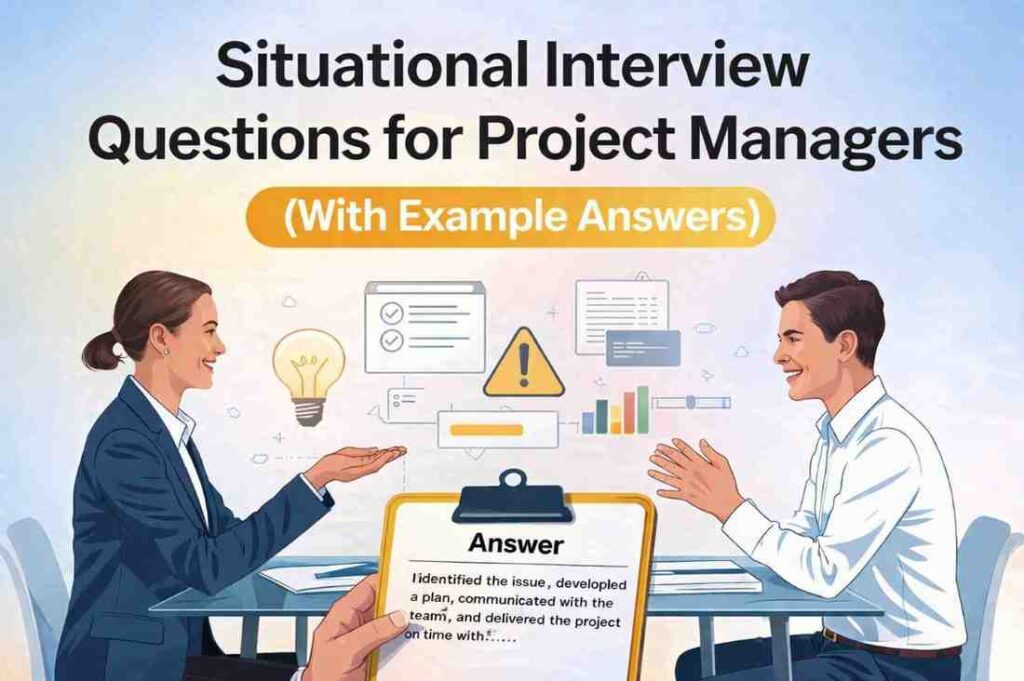
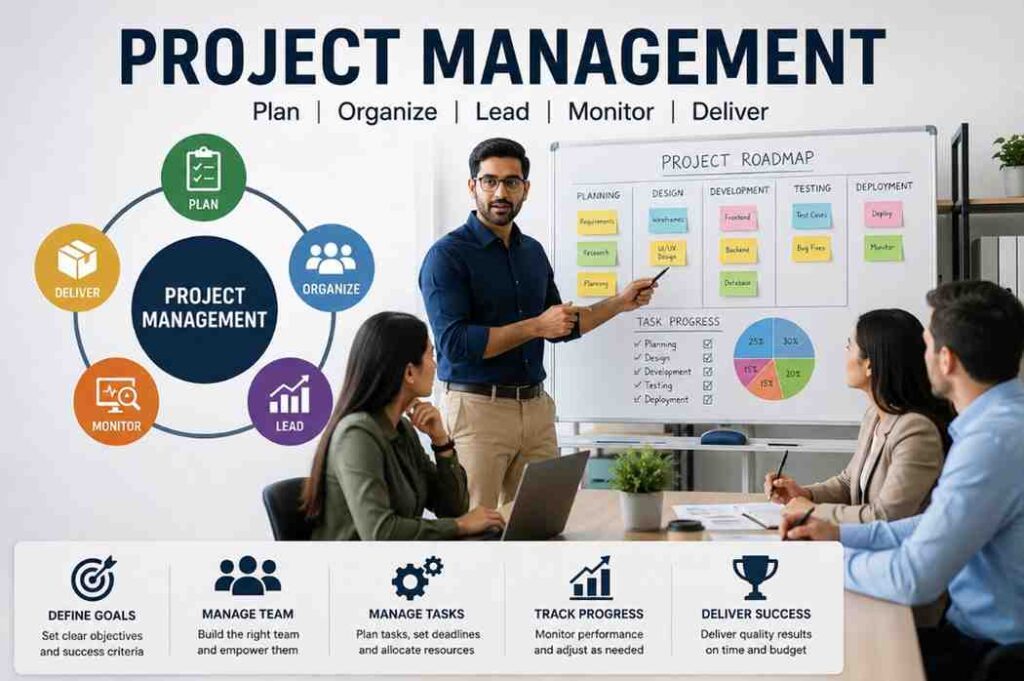
Situational interview questions are commonly used in project manager interviews to evaluate how candidates respond to real project challenges. These questions present hypothetical scenarios and ask candidates how they would approach the situation.
Unlike behavioral interview questions that focus on past experiences, situational questions test a candidate’s decision-making ability, leadership approach, and problem-solving skills in potential project situations.
Employers often use situational questions to evaluate how candidates handle issues such as:
- project delays
- stakeholder conflicts
- scope changes
- team performance issues
- risk management decisions
These questions help interviewers understand how candidates analyze problems, prioritize actions, and communicate with stakeholders.
This guide covers the most common situational interview questions for project managers, including example answers and preparation strategies.
Before reviewing these questions, you may also want to explore the complete interview preparation guide: project manager interview preparation guide
What Are Situational Interview Questions?
Situational interview questions present candidates with hypothetical scenarios that they might encounter while managing projects.
Interviewers use these questions to evaluate how candidates would respond to challenging situations.
Examples of situational interview questions include:
- What would you do if a project falls behind schedule?
- How would you handle a stakeholder requesting major scope changes?
- What would you do if team members are missing deadlines?
- How would you handle conflicting stakeholder priorities?
The purpose of these questions is to understand how candidates think through problems and develop solutions.
For additional project manager interview questions, see: project manager interview questions
Why Project Management Interviews Include Situational Questions
Project managers deal with uncertainty every day. Stakeholder demands change, deadlines shift, resources become unavailable, and risks emerge unexpectedly.
Recruiters use situational questions to determine whether you can:
✔ Think critically
✔ Stay calm under pressure
✔ Prioritize effectively
✔ Lead teams through challenges
✔ Deliver successful outcomes
Why Employers Ask Situational Questions
Situational interview questions help employers evaluate whether candidates can apply project management principles in real-world situations.
These questions assess several important competencies.
Problem-Solving Ability
Project managers must analyze complex situations and identify solutions.
Leadership
Candidates should demonstrate how they guide teams through challenges.
Stakeholder Management
Projects often involve competing stakeholder priorities.
Decision Making
Situational questions reveal how candidates make decisions under pressure.
To review behavioral questions often asked alongside situational questions, see: Behavioral project manager interview questions
Common Situational Interview Questions for Project Managers
Below are some of the most frequently asked situational interview questions for project managers.
Examples include:
- What would you do if a project falls behind schedule?
- How would you handle a stakeholder requesting changes late in the project?
- What would you do if team productivity suddenly drops?
- How would you manage conflicting stakeholder priorities?
- What would you do if a key project risk becomes an issue?
- Preparing structured answers for these questions helps candidates demonstrate leadership and decision-making ability.
Common Situational Interview Questions for Project Managers
Why interviewers ask this question
Project delays are common in complex initiatives.
Best way to answer
Explain how you analyze the problem and develop a recovery strategy.
Example answer
If a project falls behind schedule, my first step is to identify the root cause of the delay. I review the project plan and discuss the issue with the team to determine whether the delay is related to resources, dependencies, or unexpected risks.
After identifying the cause, I develop a recovery plan that may include reallocating resources, adjusting priorities, or revising the timeline. I also communicate the updated plan to stakeholders to ensure alignment.
How Would You Handle a Stakeholder Requesting Major Scope Changes?
Why interviewers ask this question
Scope changes can impact project timelines and budgets.
Best way to answer
Explain how you evaluate the impact before approving changes.
Example answer
If a stakeholder requests major changes, I first assess the impact on scope, schedule, and resources. I then discuss the request with stakeholders and determine whether the change aligns with the project objectives.
If the change is necessary, I follow the change control process and update the project plan accordingly.
Check out this to learn more : leadership interview questions
What Would You Do If Team Members Are Missing Deadlines?
Why interviewers ask this question
Team productivity issues can affect project success.
Best way to answer
Explain how you identify the root cause and support the team.
Example answer
If team members are missing deadlines, I first identify the cause of the issue. It could be related to workload, unclear requirements, or external dependencies.
I work with the team to clarify priorities and provide support where needed. Regular check-ins help ensure tasks remain on track.
For additional leadership questions, see: leadership interview questions
How Would You Manage Conflicting Stakeholder Priorities?
Why interviewers ask this question
Conflicting priorities are common in projects with multiple stakeholders.
Best way to answer
Explain how you align stakeholders with project goals.
Example answer
When stakeholders have conflicting priorities, I facilitate a discussion where each stakeholder explains their perspective. I then review project objectives and constraints to help stakeholders understand the broader context.
By focusing on business priorities and project goals, we work together to reach a solution that supports the project.
What Would You Do If a Major Project Risk Becomes an Issue?
Why interviewers ask this question
Project risks can impact timelines and deliverables.
Best way to answer
Explain how you activate risk response strategies.
Example answer
If a project risk becomes an issue, I immediately review the risk response plan and coordinate with the team to implement mitigation strategies.
I also communicate the situation to stakeholders and provide updates on the steps being taken to address the risk.
For additional scenario examples, see: scenario based-interview questions project manager
Project Delay Situations
Interviewers may ask several variations of project delay scenarios.
Examples include:
- What would you do if a key project milestone is missed?
- How would you recover delayed project schedule?
- What steps would you take if tasks take longer than expected?
Strong answers should highlight planning, communication, and leadership.
Stakeholder Conflict Situations
Situational questions may involve stakeholder disagreements.
Examples include:
- What would you do if a key project milestone is missed?
- How would you recover a delayed project schedule?
- What steps would you take if tasks take longer than expected?
Strong answers should highlight planning, communication, and leadership.
Team Performance Situations
Interviewers often test how candidates manage team performance.
Examples include:
- How would you handle low team morale?
- What would you do if a team member blocks project progress?
- How would you manage a distributed team?
Strong responses should highlight leadership and collaboration.
Risk Management Situations
Project managers must respond effectively to project risks.
Examples include:
Project managers must respond effectively to project risks.
How would you manage unexpected technical challenges?
What steps would you take to mitigate project risks?
Strong responses should highlight leadership and collaboration.
Tips to Answer Situational Interview Questions
Here are several strategies for answering situational questions effectively.
1. Clarify the Scenario
If the scenario is unclear, ask clarifying questions before answering.
2. Explain Your Thought Process
Interviewers want to understand how you analyze problems.
3. Focus on Stakeholder Communication
Clear communication helps maintain alignment.
4. Demonstrate Leadership
Explain how you guide teams through challenges.
5. Highlight Risk Management
Show how you anticipate and mitigate risks.
For additional preparation strategies, see: project manager interview tips
Practice Situational Questions With a Mock Interview
Situational interview questions often require candidates to think quickly and explain their decision-making process clearly.
Mock interviews help candidates:
- practice responding to real interview scenarios
- receive expert feedback
- improve structured communication
- gain confidence before real interviews
Prepare for situational interview questions with a Project Manager Mock Interview before your real interview.
Learn more here: project manager mock interview
Frequently Asked Questions (FAQs)
What are situational interview questions for project managers?
Situational questions present hypothetical scenarios and ask candidates how they would respond.
How do you answer situational interview questions?
Candidates should explain their thought process, describe the steps they would take, and highlight communication with stakeholders.
Why do employers ask situational interview questions?
These questions help employers evaluate decision-making ability, leadership, and problem-solving skills.
What is the difference between situational and behavioral interview questions?
Behavioral questions focus on past experiences, while situational questions focus on hypothetical scenarios.
Conclusion
Situational interview questions are designed to reveal how you think, lead, and solve problems in real-world project environments. Employers want project managers who can adapt to changing circumstances, communicate effectively, manage risks proactively, and lead teams toward successful outcomes.
By preparing thoughtful responses and using the STAR method, you can confidently demonstrate your project management expertise and significantly increase your chances of securing your next role.
Whether you’re interviewing for a Project Manager, Agile Project Manager, Program Manager, or PMO position, mastering these situational interview questions will help you stand out from the competition.